Cleaning hard floors can be surprisingly tedious. Traditional routines usually mean vacuuming up crumbs first, mopping away sticky spills second, and then spending more time scrubbing out buckets and mops.
A wet dry vacuum mop combines those steps, picking up dry debris and washing sticky liquid in a single pass. The best modern units even rinse and dry their own brush rollers automatically.
But there is a catch: a machine that cleans brilliantly can also be frustratingly high-maintenance. Sour odors, tangled hair in the brushroll, and grimy dirty-water tanks can quickly turn a time-saver into an extra chore.
So, which floor washer is actually worth your money? The right choice depends on your flooring type, the kinds of messes your household makes, your budget, and how much hands-on upkeep you are willing to tolerate.
Quick Picks: Top Recommendations for Wet Dry Vacuum Mops
- Best Overall: Tineco Floor ONE S7 Pro — Balance of wet/dry suction, smooth self-propelled drive, and streak-free floor washing. [Check Price on Amazon]
- Best Value: Dreametech H12 Pro — Hot-air drying dock and edge-to-edge cleaning at a very competitive price. [Check Price on Amazon]
- Best for Pet Hair: Roborock Dyad Pro — Multi-roller design with high suction to pull fur out of corners without jamming. [Check Price on Amazon]
- Best Premium: Shark HydroVac MessMaster — Antimicrobial brushroll and powerful stain removal for heavy household messes. [Check Price on Amazon]
What Actually Matters in a Wet Dry Vacuum Mop?
A floor washer combines vacuum suction with a damp motorized roller. Instead of two separate steps, it lifts loose crumbs while wiping up liquid spills simultaneously. However, execution varies significantly across brands.
- Wet & Dry Synergy: Loose cereal or dust is easy, but dried sauce or mud requires good downward pressure and consistent fluid delivery. Look for independent tests that evaluate dried-stain removal, not just showroom demos.
- Edge-to-Edge Cleaning: Many machines clean well in open spaces but leave a 1-inch unwashed gap near baseboards and kitchen cabinets. Check for zero-margin or dual-edge roller designs if you have extensive cabinetry.
- Self-Propelled Drive: A heavy water tank can make pushing a floor washer exhausting. Look for motorized forward (and reverse) traction that makes the machine feel weightless in hand.
- Water Management: A great unit leaves floors damp, not soaked—crucial for protecting hardwood seams from moisture damage.
Best Wet Dry Vacuum for Pet Hair: What Pet Owners Need
Pets change the cleaning equation entirely. Muddy paw prints, spilled water bowls, and floating fur create unique challenges that standard dust tests miss.
- Anti-Tangle Rollers: Traditional bristle brushes wrap pet hair into an unmanageable clump around the axle. Look for active scraper blades or V-shaped dual-comb designs that strip hair away continuously.
- Separating Solids from Liquids: Pets shed hair and kibble along with liquid. A dirty-water tank with a built-in strainer basket keeps solid hair clumps from washing down your kitchen sink and clogging the pipes.
- Odor Prevention: Damp organic matter combined with pet hair breeds bacteria fast. A self-cleaning cycle is helpful, but accessible internal air channels and a removable filter are essential to keeping bad smells away.
Hardwood Floors: Water Control and Safety
Hardwood and laminate flooring demand caution. Excessive water penetration can cause warping, buckling, or finish dulling over time.
- Moisture Regulation: Ensure the model allows you to adjust water flow or features smart sensors that automatically moderate liquid output based on floor soil levels.
- Detergent Compatibility: Never use generic floor soap or foaming dish detergent. Stick strictly to the manufacturer-approved cleaning solution to prevent streaks and internal pump damage.
- Avoid Steam Unless Certified: Unless both your flooring manufacturer and the vacuum brand explicitly approve steam cleaning, steer clear of high-heat steam modes on unsealed or engineered wood.
Is Self-Cleaning and Self-Drying Worth the Extra Cost?
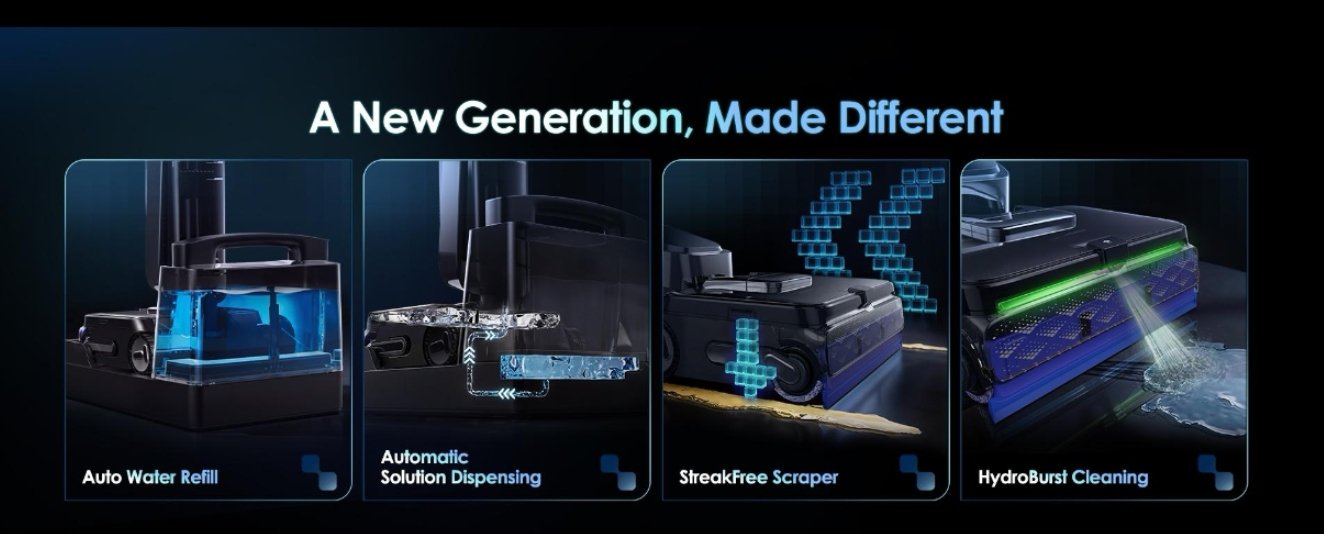
Modern premium floor washers come with docking stations that wash rollers with hot water and dry them with heated air.
- Self-Cleaning (Washing): Rinses loose dirt out of the roller fibers immediately after use, saving you from a muddy manual scrub. However, it does not empty the dirty-water tank or clean hair out of the filter trap.
- Self-Drying (Heated Air): This is the single most valuable feature for preventing sour mildew odors in humid climates. Air-drying naturally can leave rollers smelling damp if stored in a closet.
- The Verdict: If you use your floor washer multiple times a week, a heated-drying dock is well worth the premium. If you only clean occasionally, manual air-drying is easy enough to manage.
Frequently Asked Questions
Can a wet dry vacuum mop replace a traditional vacuum?
For hard floors, yes. It vacuums and washes simultaneously. However, they are generally not designed for deep-cleaning wall-to-wall carpets or thick rugs.
Why does my wet dry vacuum smell bad?
Odors occur when organic debris, pet hair, and dirty water linger in the tank, filter, or damp brushroll. Always empty the dirty-water tank immediately after use and ensure the roller is fully dried.
Do wet dry vacuum mops leave streaks on hardwood?
They can if the roller is dirty, if an unapproved cleaning solution is used, or if too much water is applied. Using manufacturer-approved low-foam detergent usually resolves streaking.
Does self-cleaning mean zero maintenance?
No. While automated docks handle the brush roller, you still need to empty the dirty-water tank, clear trapped solid debris from the strainer, and wipe down the base station periodically.